February 7, 2012

Celtic Heart


Once a month I get together with a few girlfriends to play with miniatures. We take turns hosting the gathering. This month I hosted the group at my workshop. The projects we choose vary, sometimes we work independently other times someone will suggest a project to share. I offered to show them how to do some miniature sized carvings and since Valentines Day is coming up I chose a heart design from a Dover Publishing book of Celtic Designs.


I had a piece of poplar wood that was cut thin and wide enough to fit the design. I have stained my piece to look like old English Oak for no particular reason other than I felt like it. After I was done carving the piece I cut around the outside edges with a jeweler's saw.

I might turn this project into a necklace or maybe I will put a pin on the back of it. I suspect I suspect it will become a random, surprise gift for someone on Feb. 14th. Maybe my favorite barista will be the one to end up with it.

I used Dockyard brand miniature carving tools for this project. They come in sets or as individual pieces. The sizes range from 1.5mm up to a 5mm width. Two are two issue I have with the Dockyard chisels, first is they don't hold a sharp edge for very long and second there are no shallow or medium sweeps available on these U gouges, only a full half circle, what is called a deep sweep, is available. This really limits what you can carve with them unless you grind them down to create a shallower sweep. A better option for much higher quality made miniature sized carving tools is to buy Ashley Iles block cutting gouges. Available in the USA from www.toolsforwoodworking.com.

photo copyright Karin Corbin 2012


photo copyright Karin Corbin 2012


It is a trick to sharpen a tool that small. The chisels are easy enough to deal with but the gouges used to be a challenge for me. However I just learned a trick that makes it easy. Take a piece of softwood such as pine or basswood and use the gouge to carve a groove into the wood. Each size of gouge gets its own custom groove. Put some honing compound in the groove and use a pull stroke on the gouge to polish the beveled edge at a 20 degree angle. The honing compound quickly brings up a lovely mirror like polished surface and it creates a razor sharp edge. On the side edge of the block turn the chisel over and use the inside curve against the wood to carve a matching shape and use it to burnish the inside edge to remove any burrs left from the honing process.

As you are carving and the carving tools start to feel a bit dull give then a few strokes on the honing block and they will be sharp once again. No need to regrind these tiny tools if you take good care of them.

December 7, 2011

Visit from Santa...

Some women love getting new jewelry for Christmas, I love getting new tools.
photo courtesy of Fast Cap, see link below to purchase this item


My new stocking stuffer tool I just got for Christmas from my friend Don is a little square that has magnets in the base. It is very nice for squaring up tools with steel tops such as the band saw, scroll saw, drill press table etc. But it is also a wonderful jig for squaring up miniature projects. You know those metal boards you use with magnets for assembling things? Yes, it will work great on those for holding tall pieces in upright positions. How cool is that? The measurements are in inches on one side and metrics on the other.
It is marketed by Fast Cap
http://www.fastcap.com/estore/pc/viewPrd.asp?idproduct=9935

Rockler sells them too.
http://www.rockler.com/product.cfm?page=22118&filter=magnetic%20micro%20square

July 4, 2011

Sleepless in Seattle

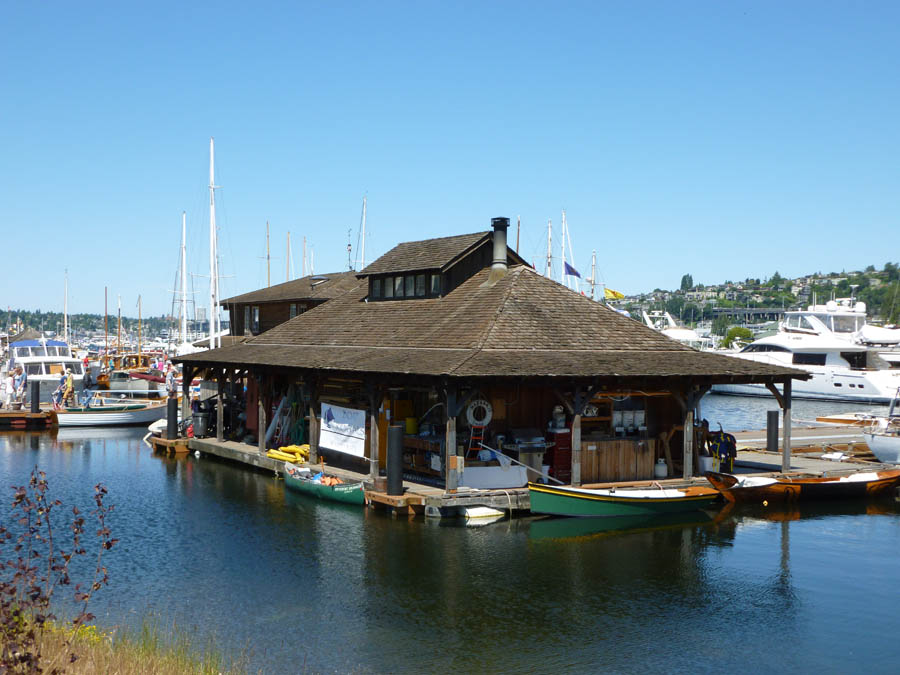
Today we took the bikes along the canal path over to Lake Union and spent the afternoon messing about with boats both big and small. The Center For Wooden Boats always has an open house on July 4th with lots of activities for all ages. There are several houseboat communities along the shores on the way there.


Honestly I was not even thinking about scale models today but there they were despite trying to escape such things for the afternoon. Might as well enjoy them since I was not responsible for making them on a holiday. There has been a pond boat building program at the Center for many years. This year the land just outside the Center got a landscape makeover in which they installed a sail boat pond. How much fun is that? One of the 4th of July activities for kids is building toy boats.

The photos below are of the workshop where the pond sailing program is held. The program is in conjunction with a City of Seattle Alternative, middle school. What a fun way to learn math and science!
photo copyright Karin Corbin 2011


Now for something to inspire you to make a marine related miniature scene. The small shed at the Center for Wooden Boats that serves as their boat rental office. I love the oar for a weather vane and the decorative shingle detail.
photo copyright Karin Corbin 2011

My favorite boat of the day, a small steam powered launch.
photo copyright Karin Corbin 2011

June 6, 2011

Sunset Hill


This evening an errand took us up to the top of the bluff in my neighborhood. There is a birdhouse up there that I built in the early 1990s so I stopped by for a quick photo shoot. It is one of the first birdhouses I sold. It has that shabby chic, antique look after spending nearly 20 years out in the rain and wind. I think she looks pretty good. It has sheltered a great many baby birds over the years, there is nest building going on right now for the newest generation.

I am thinking about making a version of this bird house scaled for dollhouses. Would you all like that?

A few blocks away from the birdhouse I came across a perfect glitter house project. I will start making it this summer. It works for both European and American scenes, the Tudor revival era from the 1930s. The house has a lot of interest without being overly fussy. It looks great from all 4 sides, not often I come across a house that does not need a lot of modification. I will make some changes to the picture windows to give them a bit more of an old world feel. Those windows look out to the same view I have from the beach.

I adore the twin gable peaks with the chimney between.

May 9, 2011

Home Port

Today is photolog day as I had my camera hooked to my belt loop when I was out for lunch. Click on the photos to enlarge them, they look much more colorful that way.

The marina we live in, I took this photo from the end of the public fishing pier. This view is looking to the south, my workshop is a few blocks south of all the boats.

It has been a very cold and rainy spring, the coldest recorded in Seattle. So no pretty sunny photos for you, this is a reality show today. But my neighbors, the turtles and the duck, found some diluted solar radiation on their pond. I suspect this pond was the home of the lost turtle that wandered into the parking lot at my workshop. A turtle could walk that far in a day or two. We are hoping our young friend who was given the turtle will be accepting of returning the turtle to its natural habitat. I think she has found the turtle to be a rather boring pet so I imagine she will be interested in the project knowing that she can still visit her turtle.

I was feeling a little stir crazy at lunch time today so I hopped on the bicycle and road a short distance up the street. For two dollars you can get a hot dog and sit at a counter with a water front view. The Little Coney burger joint is right next to the marina we live in and it is located in a water front city park with a very nice beach, meadows and wooded hillside. Miles of walking trails and it is at the end of a city wide bicycle trail system. The photo below is also from the end of the pier but looking to the north, that is the beach at the park. The beach continues on around the point.


Looking at the these photos you would not think I lived right in the middle of a major metropolitan city. I can see open space, water, beaches, mountains and trees for miles and miles. There is a miles long wooded bluff buffering us from the city. My little bit of heavenly retreat on the planet earth that has all the conveniences and cultural opportunities of modern urban living. Once in a while we even get warm sunny days!

April 20, 2011

Final Cut


photo copyright Karin Corbin 2011

The last pair of new scissors I purchased this week also have a micro serrated blade that helps capture the fine fiber so it is easier to trim it off. They are very sharp. I purchased them at a store that sells stamps for crafters. Micromark also carries this little scissors. I think I will try and order a curved blade version of these to add to my collection. They are not expensive, under $12.00 a pair. They are a great tool for that final little trim. Now that I have taken a photo I can see that wee bit more of trimming that needs to be done.

I hereby give myself a certificate in micro scale thatching competence! What a relief to get all that stuff sorted out. But the work is only part way done as now I have to photograph and write the tutorials for the thatching kits.

That is a common sewing pin in the photo next to the penny. Scale is such a funny thing, in the photo the pin looks more like a nail.

April 19, 2011

Thatching tools


Every time I create another prototype for the Shamrock Cottage I do a little more thatching practice. The other day my thatching frustration resulted in one of those ah ha! moments. I was using the wrong kind of scissors for the job.

What I needed were scissors with micro serrations on one of the blades. The small hairlike fibers will drop into the grooves and stay put instead of skating away across a smooth blade. What a huge difference those scissors made, it is so easy now to get a nice even thatching job.

There are two pairs of micro serrated scissors in the photo above. The ones with the plastic handles came from a beauty supply store, they are made for trimming hair. I chose the inexpensive pair that was less than $15.00. I use those for the basic level and bevel cutting.

The second pair has a small, arrow point curved blade that is only half an inch long. Those are perfect for digging in and feathering out any areas that have too long of strands or areas that look somewhat clumped and ridged. I call them my blending shears. I found those little curved scissors in a store that caters to fishermen who like to tie their own flies. The exact same micro serrated scissors are also available from stores that cater to embroiders. To find a pair like this the keywords to search on are ... micro serrated arrow point curved scissors .

photo copyright Karin Corbin 2011


The other essential tool in the photo is a fine toothed wire brush. The fibers must all be combed in the right direction or your roof will look like a recently vacuumed carpet with fibers going in all directions.

March 18, 2011

Japanese Influence

photo copyright Karin Corbin 2011


photo copyright Karin Corbin 2011

photo copyright Karin Corbin 2011


Architecture from all over the world has been a big influence on my artistic life and the lives of those who commission my work. The two structures shown above, one a pagoda style birdhouse, the other a very large light fixture, were commissioned from me by a woman who loves Japanese architecture. She does not live in a Japanese house but she does live on a bluff on an island.

The last time I visited there about 4 years ago there had been weeks of heavy rain storms and the bluff was in danger of collapse, in fact some of it had already sloughed away and the pagoda birdhouse was then in real danger as it very close to the edge. I have no idea if it survived, I am afraid to find out as I would mourn the loss.

I feel the loss of the lives and also the loss of the buildings and cherished gardens in Japan.

More of the Asian influenced birdhouses I have made are below.

photo copyright Karin Corbin 2011

photo copyright Karin Corbin 2011

The cherry trees are starting to bloom, it is time to build real birdhouses again. This year I will also make 1:12 scale birdhouses including a miniature of the one above with the slate roof on it. The miniature will also have a real slate roof.

March 15, 2011

Shamrock Cottage


Top O' the mornin to you all!

In the spirit of St. Patrick's day I planned a surprise for the blog this week. I just finished this prototype for a new 1:144 cottage kit. The roof is gold, the treasure that was found at the end of the rainbow that was over my workshop this week.


photo copyright Karin Corbin 2011


A closer look at the detailing on the window and doors. The ruler is to help you understand the size of this wee wonder. Click on the photo to enlarge it.

I am linking this post to "White Wednesday" at the Faded Charm Blog. Be sure to visit it is fun too see all the White Wednesday links.
http://fadedcharmcottage.blogspot.com/2011/03/white-wednesday-91.html

February 22, 2011

Ladder is finished

photo copyright Karin Corbin 2011


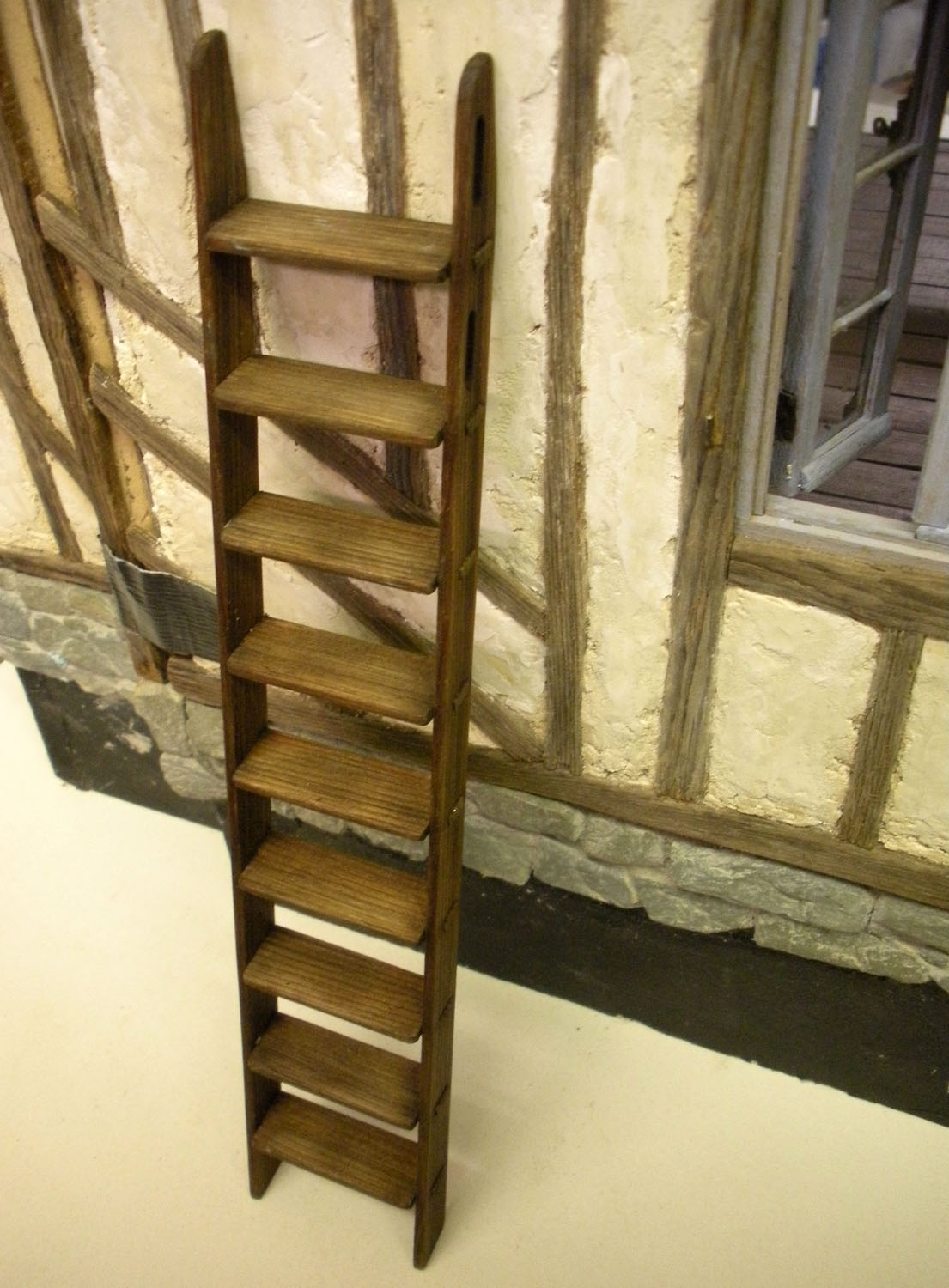
Here is the ladder that will be used in the 1:12 scale dollhouse. I made it with a bit of a nautical influence from the style of companionway ladders. The imagined resident took a bit of care with the crafting of this functional object. It is not primitive rough work although it does show some wear from feet and a bit of dirt of course!

I posed it against the outside wall of the structure as it would have been too dark to photograph inside the house. I was not in the mood to setup lights for a proper photoshoot this evening. Don't you just love the duct tape that helps hold the sides of the uncompleted dollhouse together? I am looking forward to the day when the interior is finished to the point where I fix the walls together permanently. But getting there is fun and you get to go along for the journey.

I really enjoyed making this ladder, it was a nice change. But now I have to get back to the paper houses for the rest of the workday.

February 9, 2011

Valentines and Doves

photo copyright Karin Corbin 2011


I found some lovely pale peach paper the other day, it looks great with the pearl white. I liked it so much I decided to make a Valentine's Day version of the Dovecote. The Cottage will be done in this color scheme too but it won't be finished until the weekend.

I think the peach will become one of the standard color choices I will be offering.

January 19, 2011

White Wednesday

photo copyright Karin Corbin 2011

I have done a little resizing on the 1:144 dovecote design to match it's scale to the small cottage. Today they are dressed in winter whites. Christmas might be over but winter is still going strong with lots of new snow on the beautiful mountains that I see when I take my walks. We had two inches here at the workshop the other day.

I have noticed a real trend in blogs that feature all white interiors in homes. I thought it would be fun if I offered these little houses in an alternative color scheme. I think they are very charming this way. My material choices are actually ivory white and a pearly, iridescent golden white along with a bright white for the landscape.  The pale turquoise door adds just that little bit of spice to the look.

Yes, these two finished houses are for sale, they are $35.00 each. Just write to me to order them, karincorbin at gmail. The cottage is 2.25" (55mm) tall at the peak of the roof.

photo copyright Karin Corbin 2011

When I glanced over at my countertop just now it looked like a tree farm in a snowy field, in miniature of course. I had to bleach some bottle brush trees for the white houses. After bleaching and rinsing I rubbed white paint into them. I use a piece of white styrofoam scrap as my drying rack. I certainly did not intend to create a snow scene. The front edge of the piece looks as if children had been making a whole bunch of snowballs in anticipation of defending a snow fort.

December 21, 2010

Birdhouse for a birdhouse

photo copyright Karin Corbin 2010

One could think of the new design as a dollhouse for a dollhouse but in this case it is a birdhouse for a birdhouse.
photo copyright Karin Corbin 2010

The photo shows the new miniature sitting inside the bottom (feeder) floor of a 1:12 scale half timber structure I made as a functional birdhouse years ago.

August 24, 2010

Architectural images from Normandy

photo copyright Karin Corbin 2010
I love this old lantern with all the fancy, stamped metal embellishments.
These images have been left in higher resolution so do be sure to click on them for better viewing.

Every once in a while I take a little vacation back to France by going through folders of photos I took 3 years summers ago. The are of real value to me in helping to create a realistic dollhouse. It is not so much that I exactly copy a specific architectural detail. The value is that I know exactly what the textures and colors of the materials I am using should like when I finish the parts for my project.

photo copyright Karin Corbin 2010

Looking at this photo I took in the Normandy region of France of  hinges and shutters I think I did get my miniature versions to look just right.

August 18, 2010

Making the pintles

photo copyright Karin Corbin 2010

A quick hinge preview for you. I won't install the hinges until after the shutters are painted. I have drilled the nail holes into the straps. The wire nails I will fabricate will go all the way through the shutter and then be bent over and clinched on the opposite side of the wood.

I have used a patina product called "Instant Rust" from Modern Options on the hinges. It is real rust but just a light surface coating. I have not used this product before, I am pleased with it. I purchased it in my local hardware store, it is part of a line of decorator products.

photo copyright Karin Corbin 2010

The pintles I am using to hang the shutters are very simple to make. I have used annealed steel wire. Make a simple 90 degree L shaped bend and then cut to length. Don't forget to dress off the end of the wire so it is smooth with no sharp edges left from being cut by the pliers. The other end that goes into the wall can be pointed. That is what the cup shaped grinding stone in the Dremel motor is for, dressing smooth the end you don't want to be sharp.

August 17, 2010

Dollhouses come in cans?


I have started fabricating the shutter hinges. They will be strap hinges with a pintle support that comes out of the wall of the house. A very basic type of hinge that is not difficult to make.

Research told me a thickness of 3/16 of an inch was used for some real hinges of this type. That meant I needed metal of approx .01 inches to create a 1:12 scale part. Digging into the drawers of metals I have on hand I found a tinned can that was a good match. As I wanted steel for the hinges that also meant it was a good choice. There was a strip of metal wound around the key used to open the can. That is what I am working with.

The tin and plastic coating on the can must be burned off with a torch. This is a job to do outside as the fumes are not good for you. You can anneal the metal at the same time as you burn off the tin. I have given my metal a hammered finish so I had to again anneal the area I was going to form into the hinge barrel as the hammering work hardened the metal.


I am forming the end of the strap around a piece of music wire that I am holding in a vise. Music wire is very stiff and strong so it makes a good forming rod. Tonight's new discovery was that my pair of nylon tipped pliers I purchased at a bead store make easy work of the forming. I can grab onto the metal and hold it against the music wire without damaging the metals. The nylon is soft enough to gain a grip onto the hinge strap so I can pull the strap around to form that tight circle. The top surface of the vise acts as an alignment guide so I get a barrel that is at the correct square angle instead of being crooked in alignment. Of course my forming pin must be clamped at exactly 90 degrees to the top of the vise for this simple trick to work. Or if your don't own a vise you can drill a perfectly perpendicular hole the same diameter as the music wire in a piece of hardwood as use that as your forming tool jig.

Now that I have the hinge barrel formed tomorrow I can cut the strap to length, drill holes in it and even do some decorative shaping of the strap if I wish to do so.

Progress on shutters


The wood work on the shutters is coming along nicely.

I need to make the decision to paint them blue or leave them as they are. I think the aging looks very nice. Of course they are meant to be worn by the wind and the rain as well as having a coat of grime and a hint of green slime. I think I will have to leave the decision to paint or not paint until later when I can do a temporary installation. The  overall look of the project will tell me what to do. I suspect that I will choose the option of painting but for now I will enjoy them as they are.

I have not made the hinges, latches and shutter hooks yet. That is something I am looking forward to doing although no doubt I will feel plenty of frustration during the fabrication of them.
August 15, 2010

Building the shutters


I have started cutting the parts for the window shutters. They are basic plank board shutters but I am adding some extra detail so they have a little more interest than a plain board does. My boards are being artificially weathered for an aged look. The wood I am using is Western Red Cedar and I have selected pieces with tight, vertical grain. They will be painted blue but the first step is to make the board have a gray tone. You can see the natural color in the groove I just cut.

A groove is cut near the edges of the boards. I want the groove to be the same distance on both edges of the boards so I am using a  jig to control the position. A small flame shaped jeweler's steel burr is being used to cut the detail. My shaper is a Cameron Deep Throat drill press, this is a specialized drill press that  turns very fast and accurately, almost as fast as a router. You can't use router bits or most cutting burrs (exception diamond coated burrs) in most drill presses and get a smooth cut in wood. So generally this work needs to be done with a Dremel or Proxxon motor mounted into a drill press or even a router table. Those machines turn fast enough for routing. Always check that the bit you are using is rated to run at the maximum rpm you plan to use for cutting.


What is important is having complete control over the board you are putting a groove into. I have created a channel which controls the board. The groove will now stay in the exact position along the edge. The only work my hands have to do is push down on the board while pushing it along through the groove.


My jig is  not fancy or complicated, it is built from wood scraps. The fence at the rear is permanently fixed to the base of the jig. The fence at the front is not fixed, I clamp it into position as required. It needs to be adjustable as my shutters are of different widths. Remember jigs can be easy to make and inexpensive. The results you get will make you look like a professional.